

Introduction
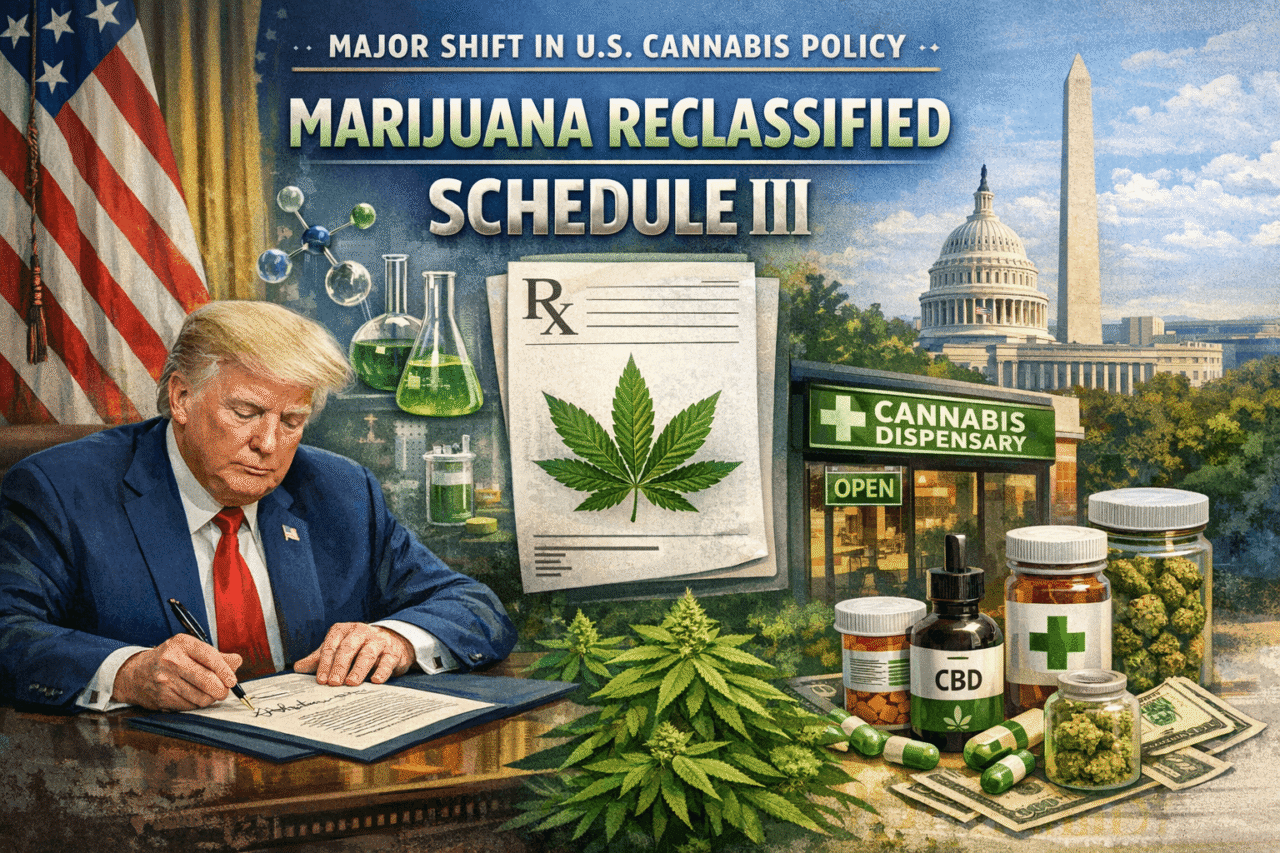
The recent executive order by President Donald Trump directing the reclassification of marijuana marks a seminal moment in United States drug policy. For over half a century, the federal government has maintained a prohibitionist stance, categorizing cannabis alongside the most restrictive substances under federal law. This directive to transition marijuana from Schedule I to Schedule III under the Controlled Substances Act signals a profound departure from this historical precedent. It represents a validation of the industry’s growth and a response to the overwhelming public support for reform. This move is not merely a bureaucratic adjustment; it is a strategic alignment of federal regulation with scientific evidence and the economic reality of a multi-billion dollar industry.
What Does Rescheduling Actually Mean?
Dismantling the Schedule I Barrier
To fully grasp the significance of this executive order, it is essential to understand the rigidity of the Controlled Substances Act of 1970. Under Schedule I, marijuana was defined as having “no currently accepted medical use and a high potential for abuse,” a classification shared with heroin and LSD. This designation stifled scientific inquiry and delegitimized state-legal medical programs. The President’s order to downgrade its drug schedule to Schedule III places cannabis in a category reserved for drugs with a moderate to low potential for physical and psychological dependence, such as ketamine or anabolic steroids.
Economic and Scientific Implications
The implications of this shift are far-reaching. Economically, it promises relief from Section 280E of the Internal Revenue Code, a tax provision that has crippled cannabis businesses by disallowing standard tax deductions. By moving to Schedule III, the industry effectively steps out of this punitive tax bracket, fostering a healthier economic environment for operators. Scientifically, rescheduling removes many of the draconian hurdles that have historically impeded research. Institutions will face fewer barriers to studying the plant’s therapeutic efficacy, paving the way for FDA-approved treatments and a deeper understanding of cannabinoids.
Impact on Consumers and Washington D.C.
Unlocking the District’s Market
One of the most immediate and ironic consequences of this federal policy shift may occur in the federal capital itself. Washington D.C. voters legalized possession and home cultivation years ago, but a regulated sales market has been blocked by a congressional spending provision known as the Harris Rider. This rider prohibits the use of federal funds to enact regulatory frameworks for Schedule I substances. By reclassifying cannabis to Schedule III, the executive order circumvents this legislative blockade. Legal experts suggest this move could finally let Washington D.C. legalize recreational sales, allowing the District to establish a safe, taxed, and regulated commercial market comparable to neighboring states.
What This Changes for the Consumer
For the average consumer, while this order does not federally legalize recreational use nationwide, it signals a shift toward normalization and safety. Rescheduling implies a greater level of oversight regarding product safety and consistency, potentially involving the FDA in establishing standards for manufacturing and labeling. This transition moves the consumer experience away from the uncertainty of the gray market toward a future where cannabis products are regulated with the same rigor as other prescribed medications or wellness products. Furthermore, rescheduling cannabis as a less dangerous drug validates the experiences of millions of medical patients, potentially expanding insurance coverage for cannabinoid-based therapies in the long term.
Conclusion
President Trump’s executive order is a decisive step toward modernizing America’s antiquated cannabis laws. While it stops short of the full de-scheduling advocated by some activists, it effectively dismantles the most significant financial and research barriers facing the sector. By acknowledging the medical validity of cannabis and removing the Schedule I stigma, the administration has laid the groundwork for a more rational, science-based approach to drug policy. As the Drug Enforcement Administration (DEA) moves to implement this directive, the industry looks forward to a future defined by innovation, legitimacy, and distinct regulatory clarity.
