
Introduction: A Historic Pivot in the Golden State
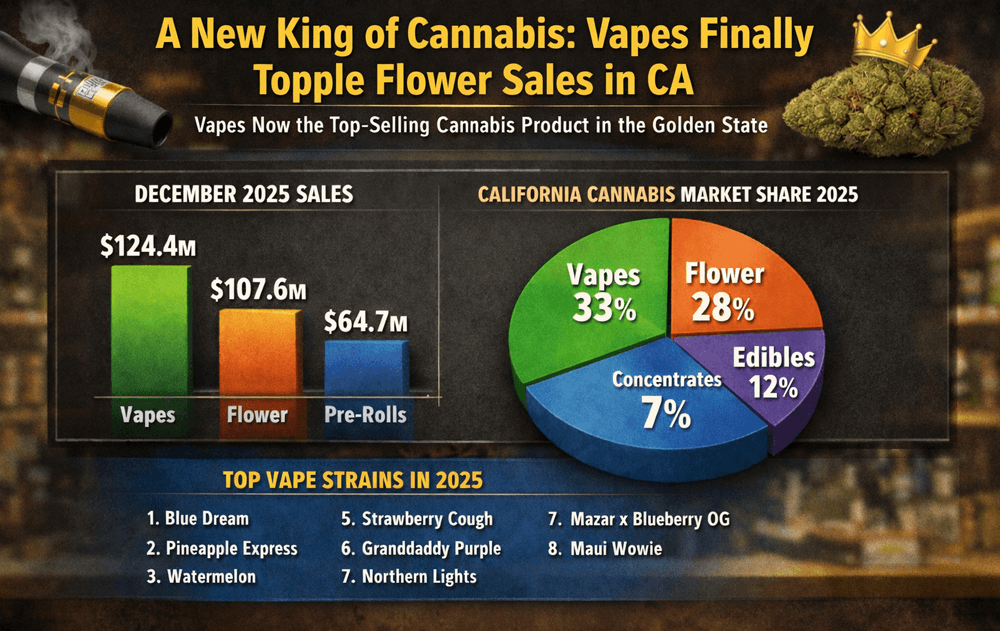
The California cannabis industry has reached a significant milestone that redefines the commercial landscape of the world’s largest legal market. For the first time since the inception of the state’s regulated adult-use program, cannabis flower—the long-standing cornerstone of retail sales—has been unseated from its primary position. Market data from 2025 and early 2026 confirms that vape products have officially overtaken flower as the top-selling product category in California. This transition represents more than a temporary fluctuation; it signals a fundamental shift in consumer behavior, manufacturing priorities, and the regulatory oversight required to maintain market integrity. As the industry matures, the rise of vaporization highlights a move toward technological delivery systems over traditional combustible plant material.
The Drivers of Vape Dominance
Historically, cannabis flower dominated retail sales due to its cultural heritage and perceived authenticity. However, the modern marketplace is increasingly driven by a demographic that values portability, discretion, and consistent dosing. Recent data indicates that vape cartridges and disposable devices have successfully bridged the gap with traditional consumers while capturing a significant portion of newer market participants. In the summer of 2025, the market reached a “program first” when monthly revenue for vape products surpassed $117 million, eclipsing the $113 million generated by flower sales. This trend has been particularly pronounced among younger consumer segments, such as Generation Z, who allocate a higher percentage of their cannabis budget to vapes than to any other category. The convenience of “all-in-one” devices and the emergence of high-quality extracts, such as live resin and cured resin, have further solidified this preference by offering a flavorful experience that rivals the terpene profiles of raw flower.
Regulatory Challenges and Testing Implications
The ascent of vaporization as the primary consumption method brings new complexities to the regulatory and operational spheres. Currently, California regulators are considering significant restrictions on disposable vape products, citing environmental concerns and potential public health risks. Industry stakeholders warn that such bans could inadvertently strengthen the illicit market by removing popular legal options. Simultaneously, the shift toward oil-based products necessitates rigorous analytical scrutiny. For labs and manufacturers, this means a substantial increase in the volume of distillate testing, with a particular focus on identifying residual solvents used in the extraction process. Furthermore, the reliance on specialized hardware introduces the risk of heavy metal contamination. As a result, the industry is seeing a heightened demand for comprehensive heavy metal testing to ensure that heating elements and cartridge components do not leach hazardous substances into the final product, ensuring consumer safety in this rapidly expanding category.
Conclusion: Navigating a Concentrated Future
The dethronement of cannabis flower by vape products marks the end of one era and the beginning of another in the California market. While flowers will likely remain a vital component of the industry—both as a retail product and as the raw material for extraction—it no longer stands as the undisputed “king” of the shelf. The implications for the future are clear: success in the legal cannabis sector will increasingly depend on innovation in extraction science and hardware reliability. As the industry moves forward, the ability to navigate potential regulatory restrictions on disposables while maintaining high standards for purity and safety will be paramount. This evolution reflects a broader maturation of the cannabis industry, where standardized, laboratory-verified, and technologically-integrated products are becoming the preferred choice for the modern consumer, setting a precedent that will likely influence emerging markets across the United States.